They say that summer is the time for light reading. If light means mindless or predictable, no thanks. But if light means comic, then I’m in. Here are two comic novels I thoroughly enjoyed this summer:
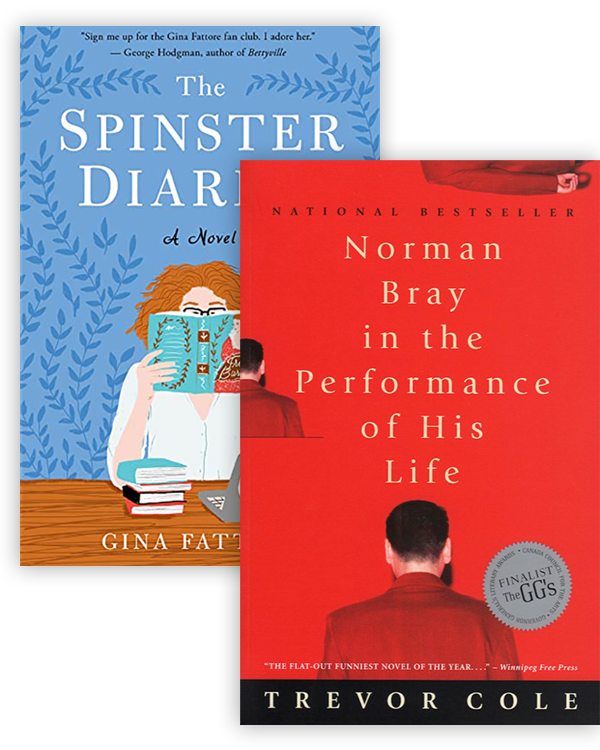
First off is The Spinster Diaries, a first novel by an American TV writer named Gina Fattore. “That’s right. Spinsters. Everyone thinks we don’t have those anymore, that they’ve disappeared from the face of the earth along with governesses and embroidered screens.” The narrator theorizes that we ignore the existence of contemporary spinsters because “it wigs people out to think of someone being a spinster and not devoting every second of her waking life to romance.”
Our charming and funny narrator doesn’t have time to devote her life to romance; she’s too busy looking for her next TV writing gig, marketing a screenplay, finding her car, and working on a six part miniseries about Frances Burney, Mother of the English Novel. And oh yes, there’s that small brain tumour to deal with as well. This short and frequently hilarious novel is way more fun than any romcom I’ve ever seen. Here’s to spinsters, everywhere!
The second comic novel I devoured this summer was originally published in 2004 and was shortlisted for the GG. It’s called Norman Bray in the Performance of His Life, and the author is Trevor Cole. The titular character is a ridiculously narcissistic actor who throws a hissyfit when told that his voiceover role as Tiny Taxi has been given to another actor who knows how to show up for work on time. When Norman learns that the only role now available to him is that of the villain of the animated program for children that is the only acting job he has had for years, he decides to quit rather than play “a supporting character, with twelve or fifteen lines of dialogue at most. It wasn’t the sort of character that could satisfy him” and he walks out of the production studio giving the producer “a grave, knowing smile of farewell, a smile that said You will soon realize your loss.”
The plot of the novel is a gradual unraveling of Norman’s lies and self-deceptions, and ultimately reveals him as a complete fraud. Why is it, then, that by the end, I couldn’t help but hope, just a little, for Norman Bray to find some small scrap of redemption? How did Trevor Cole do that? I wish I knew.