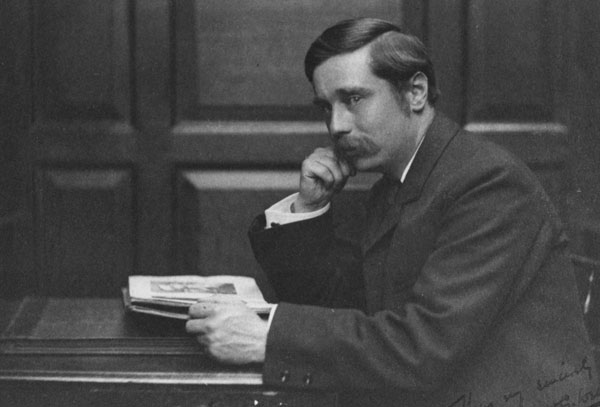
I wanted to see the documentary Google and the World Brain because the title and synopsis addressed a fear of mine – that Google is conniving to empty out libraries and archives, digitize everything, make us all forget how to do research, how to dig, how to find stuff out the way we used to – and once we are entirely powerless and in their thrall, to start CHARGING us for the information we seek. I thought it fascinating how the film began with film of HG Wells describing what he called “the world brain”, an agglomeration of all the world’s knowledge in a single entity.

Wells was prescient about a lot of things, and his notion of the world brain certainly sounds a lot like what became Google. And the film itself is a bit dry but certainly informative. It includes interviews with chief librarians at Harvard, the Bodleian, and with the French, Spanish, and German keepers of the book. The librarians all have their views, but to me the most interesting debate is the one set up between an editor of Wired, who dismisses the notions of authorship and copyright as outdated, and the commentator who insists that technology all too often overlooks the fact that data and knowledge and information are generated by real people who deserve credit and payment for their work. The film doesn’t really come out on either side and leaves a lot of questions unanswered. But for me, the conclusion of the film undermined what had gone before by misrepresenting HG Wells. They narrate and then show Wells’ despairing comment about the fate of the world from his last work Mind at the End of its Tether – and in so doing they imply that his despair results from the questionable practices of the world brain known as Google – but from what I understand of Wells’ biography (mainly from my reading of David Lodge’s biographical novel Man of Parts) is that Wells’ utter despair at the end of his life had more to do with the way technology and science were used to create the atom bombs that ended the Second World War, and the risk that this technology posed to the world as a whole. After all, the book from which the quote is taken was published in 1945. For me it really undercuts a documentary if the words of others are twisted to serve the filmakers’ purpose. Naturally, when I got home from the movie, I googled HG Wells to check my facts.